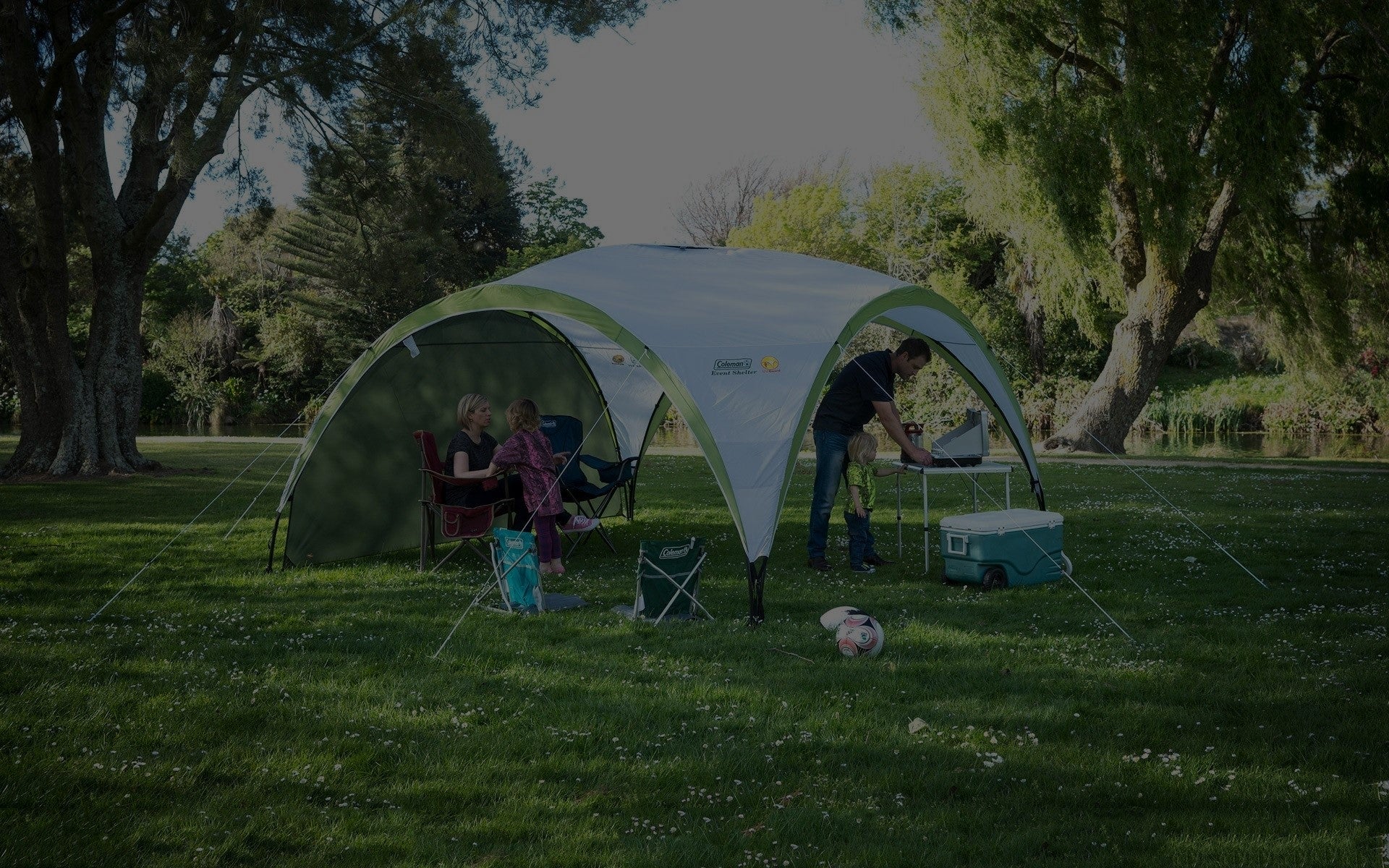
Shelters
A portable shelter gives you covered outdoor space without the commitment of a full gazebo setup. Shade tents, dome shelters, and pop-up beach shelters are quick to deploy, easy to pack, and genuinely useful whenever you need a dry or shaded spot — at the beach, at a campsite, at a school event, or in the backyard.
The key difference between a shelter and a gazebo is structure. Shelters are lighter and more packable — they set up in minutes and fit in a bag you can carry to the beach. Gazebos have a heavier steel frame with more headroom and stability. If you need something to carry in one hand down to the waterfront, a shelter is the right tool. If you need a dedicated camp kitchen cover for a week-long trip, look at our gazebo range.
What to Look For
- UPF rating: For beach and summer use, a UPF 50+ rated cover blocks 98% of UV. NZ UV levels are among the highest in the world — don't underestimate this.
- Setup time: Pop-up designs open in seconds. Hub-and-pole designs take a couple of minutes but pack flatter. Consider which suits where you're going.
- Wind pegs and guy ropes: Even a beach shelter needs to be pegged down properly. Check that the model you choose includes pegs and ropes — ours do.
- Packed size: If you're walking to a beach or campsite, check the packed dimensions before buying. Some shelter bags are awkward to carry any distance.
Frequently Asked Questions
What's the difference between a shelter and a gazebo?
Shelters are lighter, more packable, and designed for portability — ideal for beach trips, day outings, and situations where you need to carry the shelter a distance. Gazebos have a heavier steel frame with more headroom and stability, better suited to base camp setups and multi-day trips where you're not moving the structure daily. Both provide sun and rain protection; gazebos offer more covered space for the trade-off in weight and pack size.
What UPF rating do I need for a beach shelter in NZ?
UPF 50+ is the standard to look for — it blocks 98% of UV radiation. NZ has some of the highest UV levels in the world due to the clean atmosphere and thin ozone layer, particularly in summer. A shade tent or beach shelter without a UPF rating is decorative, not protective. All shelters in our range carry a UPF 50+ rated cover.
Can I use a beach shelter at a DOC campsite?
Yes — portable shelters are permitted at most DOC campsites. Peg the shelter down properly even in light conditions; NZ coastal and exposed sites can turn windy quickly. Check the specific DOC campsite guidelines for any restrictions on shelter size or placement. Pack out everything you bring in and leave the site as you found it.
How do I stop a shelter blowing away in NZ wind?
Peg every anchor point and use all included guy ropes — never skip pegs because it looks calm. Drive pegs at a 45° angle for better hold, and on sandy or soft ground use sand pegs or peg through the carry bag weighted with gear. On hard ground, a peg mallet is worth carrying. Take the shelter down if a strong wind warning is issued — shelters are not designed for storm conditions.
What size shelter do I need?
For a couple or small family at the beach, a 2x2m or 2x3m shelter is sufficient for shade and sitting space. If you need room for camp chairs, a table, and gear, look at 3x3m options. Consider that the usable space is smaller than the footprint once you account for the frame and peg lines — size up if in doubt.
How do I care for a shelter to make it last?
Wipe down the fabric with a damp cloth after each use and allow it to dry completely before packing away — sand and salt accelerate fabric degradation if left in the bag. Check the frame joints and poles for any stress or bending after windy use. Store in a cool, dry place out of direct sunlight when not in use. Periodically apply a UV protectant spray to the fabric to maintain the UPF coating over time.
For a more substantial covered space, see our Shelters & Gazebos range.