








Rain Jacket Buying Guide NZ — Waterproofing Ratings, Seams and What to Look For
Featured image: Photo by arbyte / Wikimedia Commons (CC BY-SA 3.0)
Rain Jacket Buying Guide for NZ Conditions
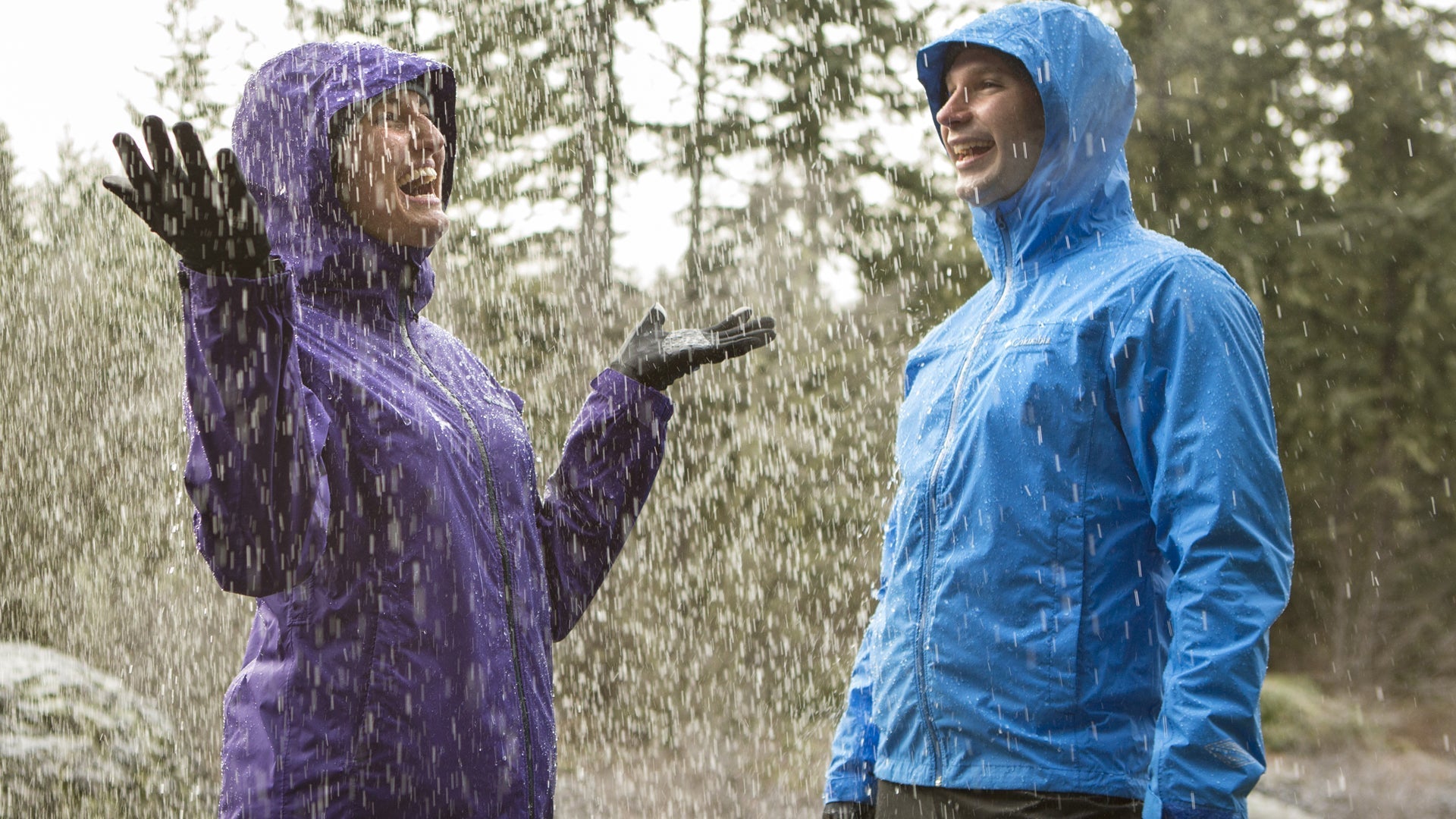
New Zealand has some of the wettest tramping country on earth. Fiordland averages over seven metres of rain a year. The West Coast can dump 200mm in a single day. Even the Tararua Ranges above Wellington are notorious for wind-driven horizontal rain that tests any jacket. Choosing a rain jacket here is not a casual decision — the right jacket keeps you warm and functional; the wrong one leaves you soaked, cold, and at risk.
This guide cuts through the marketing and explains what the numbers actually mean, what construction matters, and how to match a jacket to where you're going.
Waterproofing Ratings Explained (HH)
Waterproofing is measured as hydrostatic head (HH) — the height of a water column in millimetres that the fabric can withstand before water penetrates. The higher the number, the more waterproof the fabric.
- 5,000mm: Light showers only. Not suitable for sustained NZ rain.
- 10,000mm: The minimum acceptable for NZ tramping. Handles moderate rain reasonably well under low pressure (standing, resting).
- 15,000mm: Solid performance in sustained rain. Suitable for most three-season NZ conditions.
- 20,000mm: The gold standard for serious NZ tramping. Handles sustained heavy rain under pack pressure and movement. This is what you want for the West Coast, Fiordland, and serious alpine routes.
- 28,000mm+: Premium performance. Relevant for the most demanding conditions.
The Peak XV Tornado is rated to 20,000mm waterproofing with 20,000mm breathability — a premium hardshell built specifically for demanding NZ conditions with fully taped seams. The Peak XV Pinnacle hits the same 20,000mm/20,000mm rating at a more accessible price point, also fully taped and purpose-built for NZ tramping.
For a premium alternative with Gore-Tex construction, the Rab Kangri GTX uses GORE-TEX PACLITE Plus membrane — one of the most trusted membranes in serious tramping use globally.
Breathability Ratings
Breathability is measured in grams of moisture vapour that can pass through one square metre of fabric in 24 hours (g/m²/24h). The higher the number, the more breathable the jacket.
- Under 10,000 g/m²/24h: Low breathability. You'll overheat on the uphills.
- 10,000–15,000 g/m²/24h: Acceptable for moderate activity and cooler conditions.
- 20,000 g/m²/24h+: Good performance under sustained aerobic effort — hiking steep terrain with a full pack.
- 30,000 g/m²/24h+: Premium breathability. Relevant for high-output activities like ski touring or running.
In NZ tramping, where you're often hiking hard in rain at the same time, a breathable jacket prevents you from getting wet from the inside. A jacket with excellent waterproofing but poor breathability will leave you damp with sweat — which is almost as bad as getting rained on in cold conditions.
Seam Taping — Fully Taped vs Critically Taped
The fabric of a rain jacket might be rated at 20,000mm, but every seam is a potential leak point. Seam taping applies a waterproof tape over stitching to prevent water ingress.
- Fully taped: Every seam on the jacket is taped. The most waterproof option. Required for sustained NZ rain, especially in Fiordland or the West Coast.
- Critically taped (partially taped): Only the main stress points — typically shoulders, chest, and back — are taped. Adequate for light to moderate rain but can leak at side seams and arms in prolonged heavy downpours.
- Untaped: No seam sealing. Suitable for light drizzle or wind-breaking only.
For NZ conditions, always choose fully taped. There is no scenario on a NZ multi-day tramp where you'd wish you'd brought a critically-taped jacket instead. Both the Peak XV Tornado and Peak XV Pinnacle are fully taped — this is non-negotiable in our hardshell range.
2-Layer vs 2.5-Layer vs 3-Layer Construction
The "layers" in a rain jacket refer to how the outer fabric, waterproof membrane, and inner lining are combined.
- 2-layer: The membrane is bonded to the outer fabric, with a separate inner lining hanging loosely inside. Heavier, less breathable, but often more comfortable against the skin. Common in lifestyle and casual jackets.
- 2.5-layer: The membrane is bonded to the outer fabric, and a lightweight printed pattern replaces the loose inner lining — saving weight but at the cost of comfort against bare skin. Popular in lightweight and trail running jackets.
- 3-layer: All three layers — outer fabric, membrane, and inner lining — are laminated together into a single unit. The most durable, most breathable, and cleanest-feeling construction. Heavier than 2.5L but more robust and performs best under sustained use. The right choice for serious NZ tramping.
For multi-day tramping in NZ's demanding conditions, 3-layer construction is the performance standard.
Hood Design — Often Overlooked, Always Important
A good hood is worth more than people give it credit for. On a NZ ridge in horizontal rain, your hood is the difference between seeing and not seeing. Look for:
- Helmet-compatible hood: Not just for climbers — a roomy hood works better over a beanie or buff too.
- Single-handed adjustment: You should be able to tighten the hood while moving without taking your hands out of your pockets.
- Wired or stiffened peak: Keeps the brim out over your face in driving rain rather than collapsing flat.
- Full 180-degree rotation: The hood should turn with your head. If it stays fixed while you look sideways, it leaves a gap.
Fit for Layering
Your rain jacket goes on over your base layer, fleece, or insulated jacket. It needs to accommodate those layers without being so baggy that it flaps in the wind or catches on pack straps. Key fit points:
- Chest and shoulders: You should be able to raise your arms fully overhead without the hem riding up significantly.
- Sleeve length: Long enough to cover your wrists when reaching forward, particularly important under a pack with hipbelt.
- Hem length: Below the hip is ideal for tramping — keeps wind and rain off your backside.
- Underarm gussets or articulation: Allows natural movement without restricting shoulder mobility.
When trying on a jacket, wear it over a mid-layer and make sure a daypack or backpack hipbelt sits comfortably over the jacket without riding up or pinching.
Choosing the Right Jacket for Your Use
Not every NZ tramp demands a premium 3-layer hardshell. Here's how to match the jacket to the use:
- Casual day walks, urban use, school camps: A softer, lighter jacket handles light rain well enough. The Rab Downpour is a well-made option for casual and town use — comfortable, packable, and suitable for everyday wet weather. It is not designed for serious tramping use.
- Active use, trail running, stretchy performance: The Rab Firewall Mountain is a stretch softshell-style jacket designed for high-output activities where freedom of movement matters as much as weather protection. Best for active pursuits rather than multi-day tramping in heavy rain.
- Great Walks and moderate multi-day tracks: 20,000mm with full taping. The Peak XV Pinnacle sits at this level — a fully-taped 20,000mm hardshell at an accessible price, built for NZ conditions.
- West Coast, Fiordland, alpine routes, serious multi-day: Don't compromise. The Peak XV Tornado — 20,000mm fully taped, premium hardshell construction — is the jacket for NZ's most demanding conditions. For those who prefer Gore-Tex, the Rab Kangri GTX with GORE-TEX PACLITE Plus delivers comparable performance at the premium end of the market.
A jacket that fails in Fiordland is not a saving — it's a hazard. Hypothermia risk is real when a jacket soaks through in sustained heavy rain at altitude.
DWR — The Outer Treatment That Matters Too
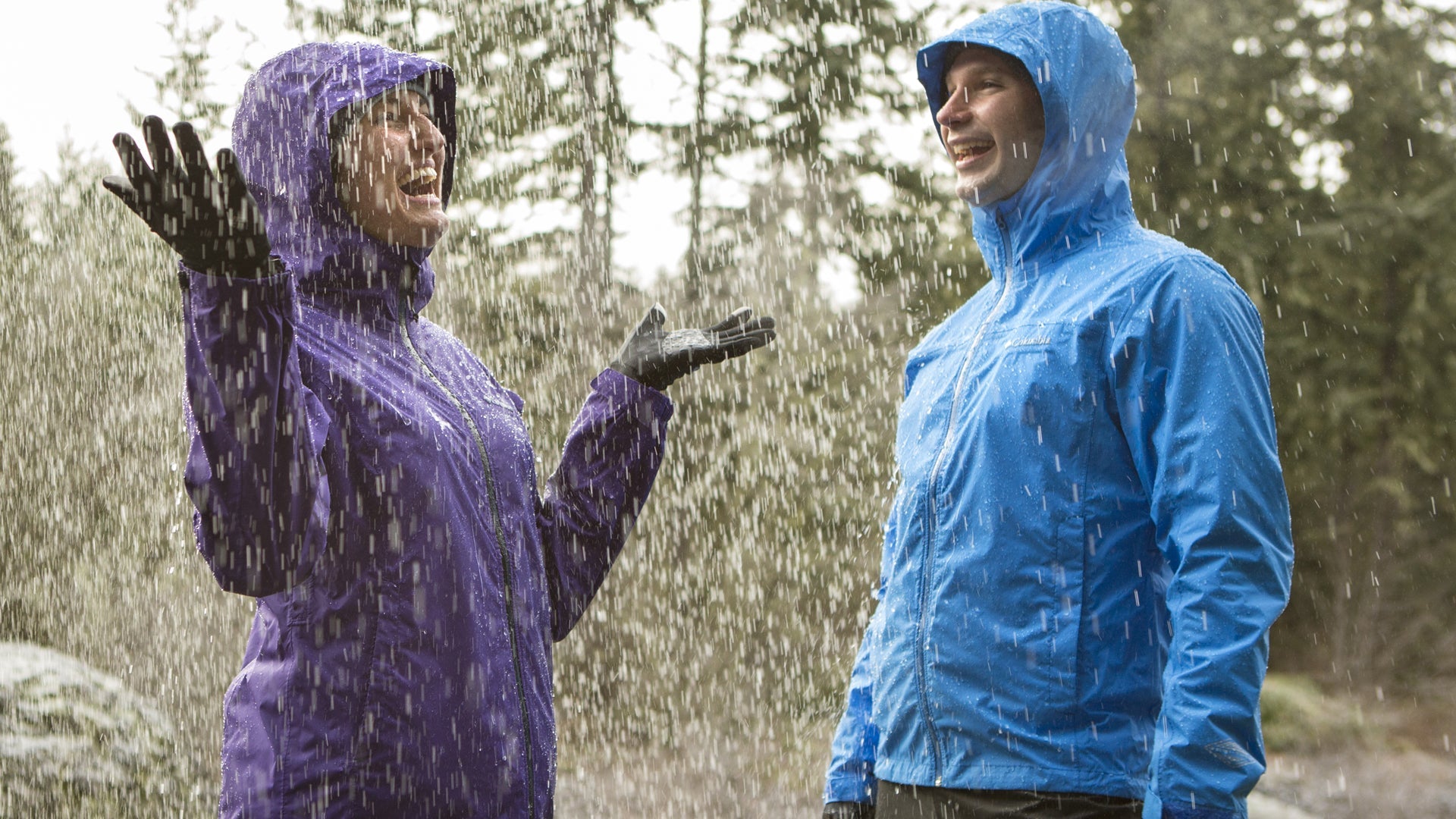
DWR (durable water repellent) is the chemical treatment on the outer face fabric that makes water bead and roll off. It's not the waterproof membrane — it's the first line of defence. When DWR is working, water beads off the surface. When it degrades (from dirt, sweat, and washing), water "wets out" on the face fabric, reducing breathability and making the jacket feel heavy.
Maintain DWR by washing your jacket with a technical wash (not standard detergent) and tumble drying on low heat. When water stops beading cleanly, re-apply a DWR spray or wash-in treatment. A jacket in good DWR condition performs significantly better than a neglected one.
Browse our full range of rain jackets to find the right jacket for NZ conditions.


