









Best Camp Lighting NZ 2026 — Top Headlamps and Lanterns for Camping
Camp lighting is one of those categories where the gap between a good choice and a bad one is felt every single time you use it. A dim headlamp on a wet night track, a lantern that runs flat by 9pm, a beam so focused it blinds every person at the hut table — these are small failures that add real friction to a trip. Good lighting is reliable, appropriately bright, convenient to recharge or replace batteries for, and considerate of others in shared spaces. New Zealand's backcountry involves both trail use (where a powerful forward beam and light weight matter) and shared hut or campsite environments (where a diffuse light mode and red light option are genuine courtesies). This guide covers our top picks across headlamps and camp lanterns for 2026, from the best tramping headlamp to solar options for base-camp use. Browse our full head torches collection for all stocked options.
What to Look for in Camp Lighting
Lumens and Beam Type
Lumens measure total light output, but raw lumen count is not the whole story. Beam type matters equally. A high-lumen flood beam is ideal for campsite use — it illuminates a wide area without blinding people directly in front of you. A focused spot beam is better for trail navigation and distance visibility. The best headlamps for tramping offer both, with a variable beam or dedicated flood and spot modes. For tramping use, 200–400 lumens on the main mode covers most situations comfortably. Maximum burst modes of 1,000 lumens or more are useful for brief moments — navigating technical ground or identifying landmarks at distance — but at the cost of battery life.
Red Light Mode for Huts
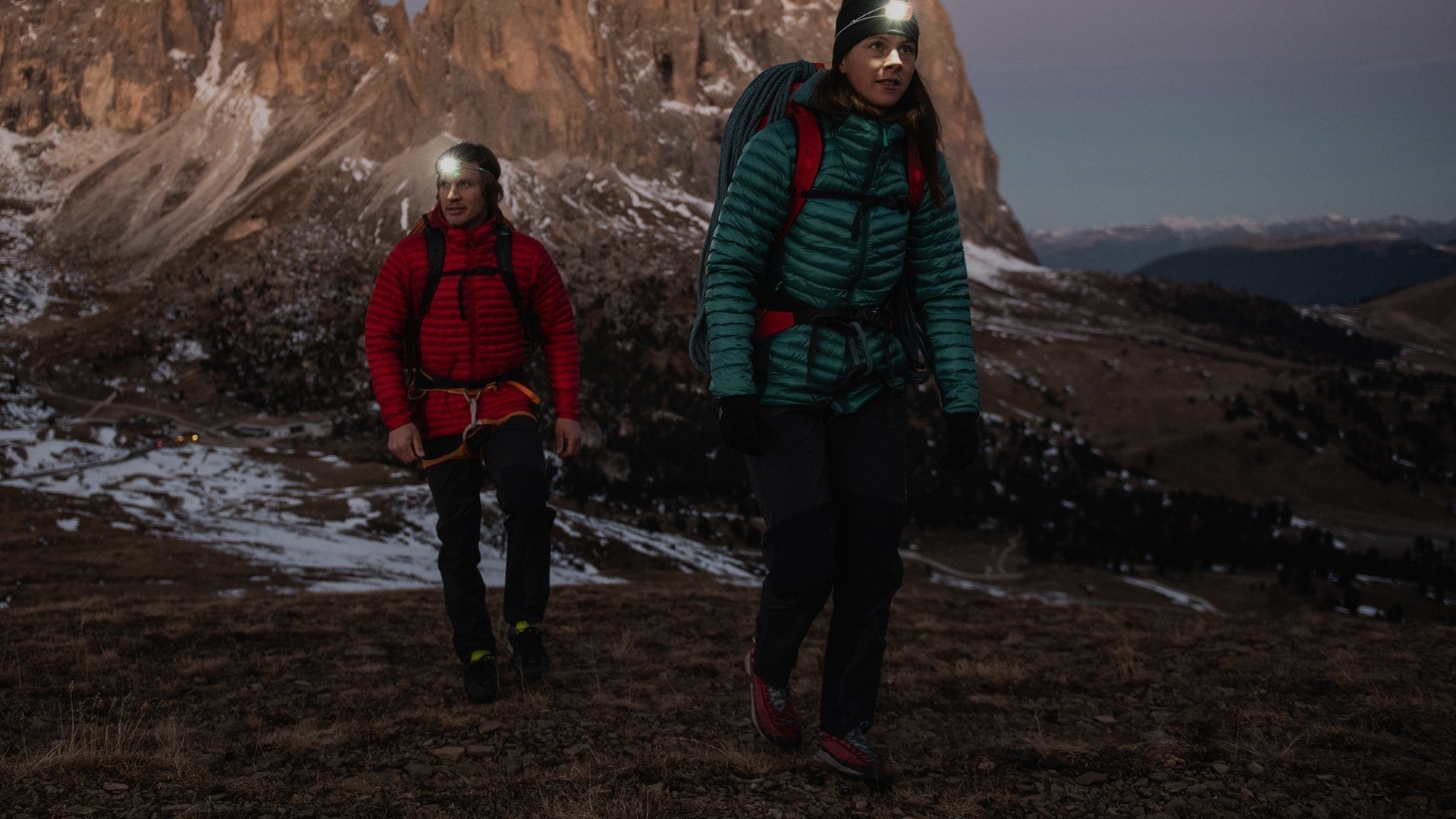
Red light mode is not a gimmick — it's a genuine consideration for anyone spending time in shared hut environments. Red light preserves night vision (your eyes don't need to re-adjust after using it) and is significantly less intrusive to other hut occupants who are sleeping. On popular NZ Great Walk huts where 40–50 people share sleeping areas, using red light for your midnight toilet trip is the considerate and appropriate choice. Any headlamp intended for hut tramping should have an accessible red light mode.
Rechargeable vs Replaceable Batteries
Rechargeable headlamps (USB-C or micro USB) are convenient for day-to-day use and reduce ongoing battery cost. The tradeoff is that if you run flat mid-trip and have no power source, you're stuck. Replaceable battery headlamps (typically AA or AAA) can be topped up with batteries bought at any dairy or petrol station — useful on long trips or in remote areas. Many trampers solve this by choosing a headlamp that accepts both a rechargeable internal battery and standard replaceable cells as a backup. For multi-day tramping without reliable charging, a replaceable-battery option or a dual-battery design is more practical than pure rechargeable.
Weight and Weather Resistance
For tramping, headlamp weight matters — it adds up on a light kit. The best ultralight tramping headlamps are under 100g with batteries. For NZ's reliably wet conditions, weather resistance (IP waterproofing ratings of IPX4 or above) is important — the headlamp needs to handle rain, steam from a wet jacket hood, and the general dampness of NZ bush. IPX6 and IPX8 ratings offer meaningful protection if a headlamp gets dunked or left out in rain.
Our Top Picks
Nitecore UT27 Pro — Best Trail Running Headlamp
The Nitecore UT27 Pro is our lead recommendation for NZ tramping and the standout ultralight headlamp in the category. It weighs just 83g with the battery — among the lightest full-featured headlamps available. Despite that weight, it delivers up to 1,400 lumens on burst mode and a practical 400+ lumens on the main trail setting, with an efficient low mode for hut use. The UT27 Pro is headband-free, using a trail-running style mount that sits low and balanced on the head — eliminating the neck strain that older headband designs cause on long downhill sections. The dual LED design (cool white for distance, warm white for close-range comfort) covers both trail navigation and campsite use. USB-C rechargeable with a spare battery compartment for backup AA cells. For NZ trampers who take weight seriously without compromising on light quality, the UT27 Pro is the current benchmark.
Nitecore HC65UHE — Best Rechargeable Headlamp
The Nitecore HC65UHE is the go-to rechargeable headlamp for trampers who want serious output without compromise. It delivers up to 2,000 lumens from a robust headband design with a pivoting head — plenty of power for off-track navigation in Fiordland bush, steep night descents, and technical route-finding. The high-output mode is available on demand; the lower modes cover hut use and campsite tasks with good battery efficiency. It includes red and green auxiliary LEDs for hut courtesy and signalling. USB-C rechargeable. Heavier than the UT27 Pro but a strong all-rounder for trampers who want maximum capability from a single headlamp. A versatile, high-performance option for serious NZ backcountry use.
Nitecore HC75UHE — Best High Output Headlamp
The Nitecore HC75UHE sits at the top of the Nitecore headlamp range, delivering 3,000 lumens of maximum output — the most powerful headlamp Dwights stocks. Designed for conditions where raw light output makes a genuine difference: technical alpine terrain in the dark, off-track navigation in dense NZ bush, search and rescue use, and extended night-hour tramping in challenging environments. The HC75UHE uses a large-format headband design with a balanced weight distribution that reduces neck fatigue on extended use, and includes multiple auxiliary light modes including red for hut courtesy. USB-C rechargeable with a high-capacity battery to sustain high-output use. For trampers who spend time on serious technical terrain and need the most capable headlamp available, the HC75UHE is the benchmark.
Luci Original Solar Inflatable Lantern — Best Base Camp Lantern
The Luci Original is a solar-powered inflatable lantern that has become a fixture of campsite and hut cooking areas for good reason. It weighs 75g deflated and collapses flat to the size of a thin disc. When inflated (a few puffs of air) and hung in a shelter or tent, it distributes warm, diffuse light across a wide area — exactly what a campsite or cooking area needs. It charges via the integrated solar panel during the day, delivering up to 12 hours of light on a full charge. Fully waterproof. No batteries, no cables. The Luci Original is not a navigation headlamp — the light level is suited to social and cooking use rather than trail work. As a hands-free campsite light, it's an excellent addition to any camping kit.
Luci Pro Solar Lantern — Best Lantern with USB Backup
The Luci Pro steps up from the Original with the addition of a USB charging port, allowing it to act as a backup power bank for charging small devices — a useful feature on longer trips where phone and GPS battery management becomes a consideration. Same solar charging, same waterproof inflatable construction, with up to 24 hours of runtime on lower light settings. It's heavier than the Original at around 140g, but the dual function as both a lantern and a backup charger adds genuine utility on multi-night trips. For trampers who want to reduce the number of charging devices they carry, the Luci Pro's combination of lighting and emergency backup power in one lightweight package is a worthwhile upgrade.
Frequently Asked Questions
How many lumens do I need for tramping in NZ?
For trail navigation on well-marked tracks, 200–300 lumens is perfectly adequate. For off-track travel, steep terrain, or navigating in heavy rain and bush, 400–600 lumens gives a meaningful improvement in visibility. High-output burst modes (1,000 lumens+) are useful for specific moments — identifying a track marker at distance, assessing terrain ahead — but are not needed for sustained use and drain batteries quickly. A headlamp with a practical 300–400 lumen main mode and a lower 30–50 lumen mode for hut courtesy covers the full range of NZ tramping use.
Should I get a rechargeable or battery-powered headlamp for tramping?
For multi-day tramping without reliable charging access, a headlamp that accepts standard replaceable batteries (AA or AAA) or a dual rechargeable/replaceable design is more practical. Rechargeable-only headlamps are excellent for day use and short trips where you can charge before departure, but running flat on a remote route with no power source is a real risk. The Nitecore UT27 Pro resolves this with a rechargeable primary cell and a backup AA compartment — an ideal arrangement for tramping use.
What is red light mode and when should I use it?
Red light mode emits red-wavelength light rather than white. Red light preserves your night vision — your eyes retain their dark adaptation, meaning you can switch back to darkness without the 10–20 minute readjustment period white light requires. In shared huts, using red light for night-time movement is a considerate standard that avoids waking other trampers. It's also useful for map reading and camp tasks where maintaining night vision matters. Any headlamp intended for hut tramping should have an accessible, easy-to-activate red light mode.
Are solar lanterns reliable in NZ's cloudy conditions?
Solar lanterns like the Luci range charge in both direct and diffuse daylight — they don't require full sun. In NZ's frequently overcast conditions, charging is slower but still occurs. A full sunny day provides a full charge; an overcast day produces a partial charge. On multi-day hut trips with any daylight exposure, the Luci Original will stay charged with reasonable use. For extended cloudy periods or winter trips with minimal daylight, the Luci Pro's USB input allows recharging from a power bank or solar panel — useful insurance in NZ's less predictable weather.