



How to Choose Tramping Boots NZ — Fit, Support and What to Look For
The difference between a great day on the hill and a miserable one often comes down to what's on your feet. Tramping in New Zealand puts boots through a genuinely demanding mix of terrain — steep clay tracks, rocky ridgelines, root-covered forest floors, river crossings, and everything in between. The wrong boot means blisters, ankle injuries, or wet feet before lunch. The right one keeps you comfortable and moving confidently through all of it.
This guide covers what to look for in a tramping boot for New Zealand conditions, how to navigate waterproofing and sole options, how to fit a boot properly, and which boots from our range suit which types of tramping. For a broader overview, see our hiking boots NZ guide.
Why Boot Choice Matters in New Zealand
NZ's track network ranges from well-groomed Great Walk boardwalks to loose scree, river-bed travel, and off-track alpine terrain. Even on managed tracks, conditions change fast — a dry track becomes slippery clay in rain, a gentle stream crossing becomes thigh-deep within hours of a rain event. Boots need to handle this variability.
A few NZ-specific realities that influence boot choice:
- Rain is frequent and can arrive without warning — waterproofing is often worth having
- Clay soils and mossy roots are extremely slippery — aggressive sole tread matters
- Multi-day packs increase ankle stress — support becomes more important with load
- Temperature variation is significant — from warm valley floors to cold ridge winds in the same day
Boot Categories — What You're Choosing Between
Flexible Trail Shoes and Light Tramping Shoes
At the lighter end of the spectrum, trail-running-influenced shoes offer maximum breathability, low weight, and nimble footwork on good terrain. They're appropriate for day hikes in reasonable weather, well-formed tracks, and trampers who prioritise comfort and speed over load-carrying support. Not ideal for multi-day trips with heavy packs, technical terrain, or consistently wet conditions.
The Salewa Wildfire NXT GTX (mens and womens) sits in this category — a versatile approach shoe with Gore-Tex waterproofing that works well on less technical terrain and approach routes, and doubles as a travel shoe.
Mid-Cut Tramping Boots
The sweet spot for most NZ tramping. Mid-cut boots provide meaningful ankle support without the weight and For serious multi-day loads and alpine terrain, the Asolo TPS 535 (available in wide fit for men and standard for women) and the Salewa Rapace GTX are our top picks — both offer the rigidity and ankle support needed for carrying heavy packs over technical ground. They're comfortable across long days, handle mixed terrain well, carry moderate pack loads confidently, and are the default recommendation for most Great Walk and multi-day hut tramping.
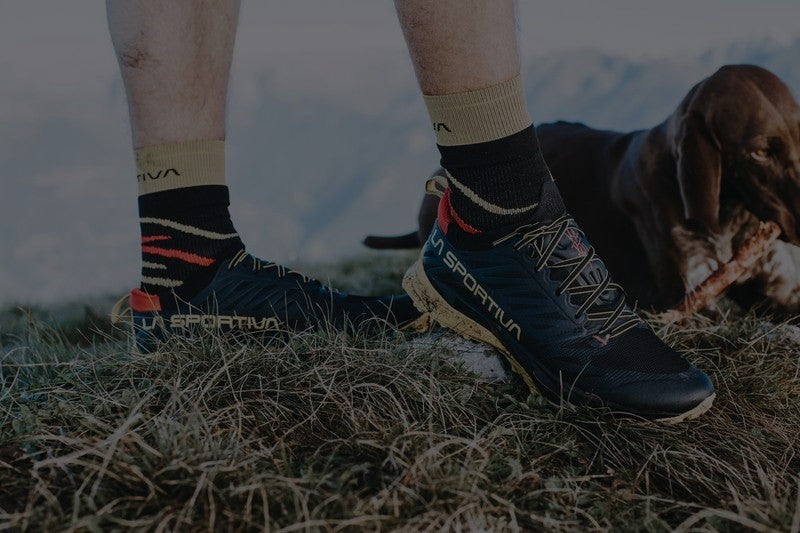
The La Sportiva Ultra Raptor III (mens and womens) is the lead recommendation here — a low-cut trail shoe. The La Sportiva Ultra Raptor III GTX (mens and womens) adds Gore-Tex waterproofing for wetter conditions. Either version handles the vast majority of NZ multi-day tramping confidently.
The Salewa Mountain Trainer 2 Mid GTX (mens) is another strong low-cut Ultra Raptor III, with Vibram sole and Gore-Tex waterproofing. Good for trampers who want a more traditional boot feel with reliable performance on mixed terrain.
The Salewa Alp Trainer 2 Mid GTX (mens and womens) is a lighter mid-cut option that leans towards the trail shoe end — better for faster-moving trampers on less technical terrain, with Gore-Tex waterproofing.
The Salomon Quest 5 Gore-Tex (mens and womens) is one of the most accessible and versatile full mid-cut options in the market — well-cushioned, supportive under load, Gore-Tex waterproofed, and suitable for a wide range of NZ conditions. A good choice for trampers new to multi-day hiking who want a reliable, comfortable boot at a sensible price.
Stiff Full Boots
Heavier, stiffer boots designed for technical terrain — steep loose ground, extended off-track travel, heavy pack loads, and alpine approaches. The stiffness that makes them feel awkward on flat ground becomes a genuine advantage on technical terrain, providing torsional rigidity that prevents foot fatigue and ankle roll on unpredictable surfaces.
The La Sportiva TX5 Gore-Tex (mens and womens) is a technical approach boot — stiffer than the Ultra Raptor, designed for demanding terrain where precise foot placement matters. Good for off-track exploration, alpine approaches, and trampers who tackle technical routes. The Gore-Tex lining adds waterproofing for NZ's wet conditions.
The La Sportiva Trango TRK GTX is the heaviest-duty option in our range — a serious full boot with a stiff last designed for extended off-track, alpine travel, and heavy pack loads. Not the boot for a casual Great Walk, but exactly the right tool for sustained technical terrain in the Southern Alps.
Waterproofing — Gore-Tex vs Non-GTX
Gore-Tex (GTX) is a waterproof-breathable membrane bonded inside the boot upper. When working well, it keeps your feet dry in wet conditions — rain, wet vegetation, shallow water crossings — while still allowing some moisture vapour to escape.
The case for Gore-Tex in NZ is strong: most tramping here involves some combination of rain, wet vegetation, and mud. A dry foot is a warm foot, and a warm foot is a blister-resistant foot. For multi-day tramping, GTX is usually worth having.
Non-GTX boots breathe better and dry faster when they do get wet — relevant if you're doing a lot of river crossings where a GTX boot will eventually fill regardless, or if you're moving fast in warm conditions and prioritise breathability over waterproofing.
For most NZ tramping conditions, a Gore-Tex boot is the safer choice. For high river-crossing routes (especially in Fiordland or off-track South Island), consider whether fast-drying is more valuable than waterproofing.
Sole and Traction
Sole tread is critical in NZ's conditions. Clay, moss, wet roots, and leaf litter are all extremely slippery, and a smooth or worn sole is a liability. Look for:
- Deep, widely spaced lugs — they self-clean in mud and bite into soft ground
- Vibram or FriXion AT rubber — both are proven on technical terrain; FriXion AT (La Sportiva) is particularly strong on wet rock
- Good heel brake — a pronounced heel lug helps on steep descents, where NZ tracks are often most dangerous
A worn sole on any boot significantly reduces grip. If your boots have been used extensively, inspect sole wear before a major trip.
Fit Guide — Getting It Right
Boot fit is the single biggest factor in comfort and blister prevention. General principles:
- Try boots later in the day — feet swell through the day; fitting in the morning means your boots may be tight on trail.
- Wear your tramping socks when trying boots — thickness matters, and a sock change can shift the fit.
- The heel lock test — your heel should not lift inside the boot when you walk. Heel movement causes blisters. If the heel isn't locked, try a different model or lacing pattern.
- Toe room — you should be able to wiggle your toes, and your longest toe should have roughly a thumb's width of clearance from the front of the boot. Tight toes = black toenails on descents.
- Width — boots that pinch across the ball of the foot or the little toe will cause problems over a long day. Some brands run narrower (La Sportiva) or wider (Salomon) — factor in your foot shape.
- Walk on an incline in the shop if possible — simulates descent conditions and reveals heel lift and toe pressure issues that aren't obvious on flat ground.
Break in new boots before a major trip. Wear them on shorter walks to identify any pressure points and allow the materials to soften to your foot.
Our Recommendations by Use Case
Multi-Day Hiking
For multi-day tramping on NZ tracks, the Salewa Alp Trainer 2 Mid GTX and Salewa Mountain Trainer 2 Mid GTX are our recommended picks — supportive, waterproof, and well-suited to NZ conditions from the Routeburn to the Heaphy.
Technical Terrain
For technical alpine routes, scree, and demanding off-track travel, look at the Salewa Rapace GTX or Crispi Futura CX GTX — stiffer, more protective, and built for the extra demands of serious mountain terrain.
Frequently Asked Questions
How do I choose tramping boots for NZ?
Consider your typical pack weight, terrain type, ankle strength, and how often you tramp. For heavy packs (15kg+) on technical terrain: full-leather or stiff synthetic boots (Crispi, Salewa Mountain Trainer). For lighter packs on well-formed tracks: quality mid-cut GORE-TEX boots (Merrell Moab 3 Mid, Salewa Alp Trainer 2). Always prioritise fit over brand or price.
What is the most important thing when buying tramping boots?
Fit. A boot that doesn't fit correctly will cause blisters, hot spots, and misery regardless of its quality or price. Try boots in the afternoon with the socks you'll use tramping, and walk on an inclined surface. The heel should sit snug; there should be a thumbnail's width of room at the toe.
Do I need waterproof boots for NZ tramping?
Yes — for NZ multi-day tramping, waterproof boots are strongly recommended. Stream crossings, persistent rain, and dew-soaked vegetation are standard across most NZ routes. GORE-TEX or equivalent membrane boots keep feet dry and reduce blister risk.
How stiff should tramping boots be?
Stiffer boots provide more support under heavy loads and on uneven terrain. Flexible boots are more comfortable for light loads and well-formed tracks. Match stiffness to your typical pack weight and terrain.
How much should I spend on tramping boots in NZ?
For Great Walk and general tramping: quality boots in the $300–$500 range (Merrell Moab 3 Mid, Salewa Alp Trainer 2) perform well. For serious backcountry or frequent heavy use: $500–$850+ (Salewa Mountain Trainer, Crispi Nevada Legend) is a worthwhile investment.
Where can I buy tramping boots in NZ?
Dwights stocks tramping boots from Salewa, Crispi, La Sportiva, Merrell, and Asolo. Browse at /collections/hiking-boots.