









How to Choose a Headlamp for Camping and Walking
A headlamp keeps both hands free for pitching a tent, cooking, walking or dealing with gear after dark. Choose one by the light you will actually use, how long it must run and whether its controls work with cold or gloved hands.
Start with the task, not maximum lumens
A broad, low beam suits close campsite jobs and preserves night vision better than full power. A focused beam helps with route finding farther ahead. Some headlamps combine both. Maximum output is usually a temporary mode and does not describe the sustained beam or total runtime.
Read the runtime detail
Compare runtime at the brightness level you expect to use. Output may step down as the lamp warms or the battery discharges. Treat the manufacturer’s test conditions as comparative information rather than a guarantee in cold, wet or continuous use.
Choose the power system
- Rechargeable: convenient for frequent use when charging is available.
- Replaceable batteries: simple to swap on longer trips if compatible spares are carried correctly.
- Hybrid: can accept more than one approved power source; confirm the exact options.
Lock the controls during transport and protect spare batteries from short circuits. Recharge and store lithium batteries according to the manufacturer’s instructions.
Check fit and controls
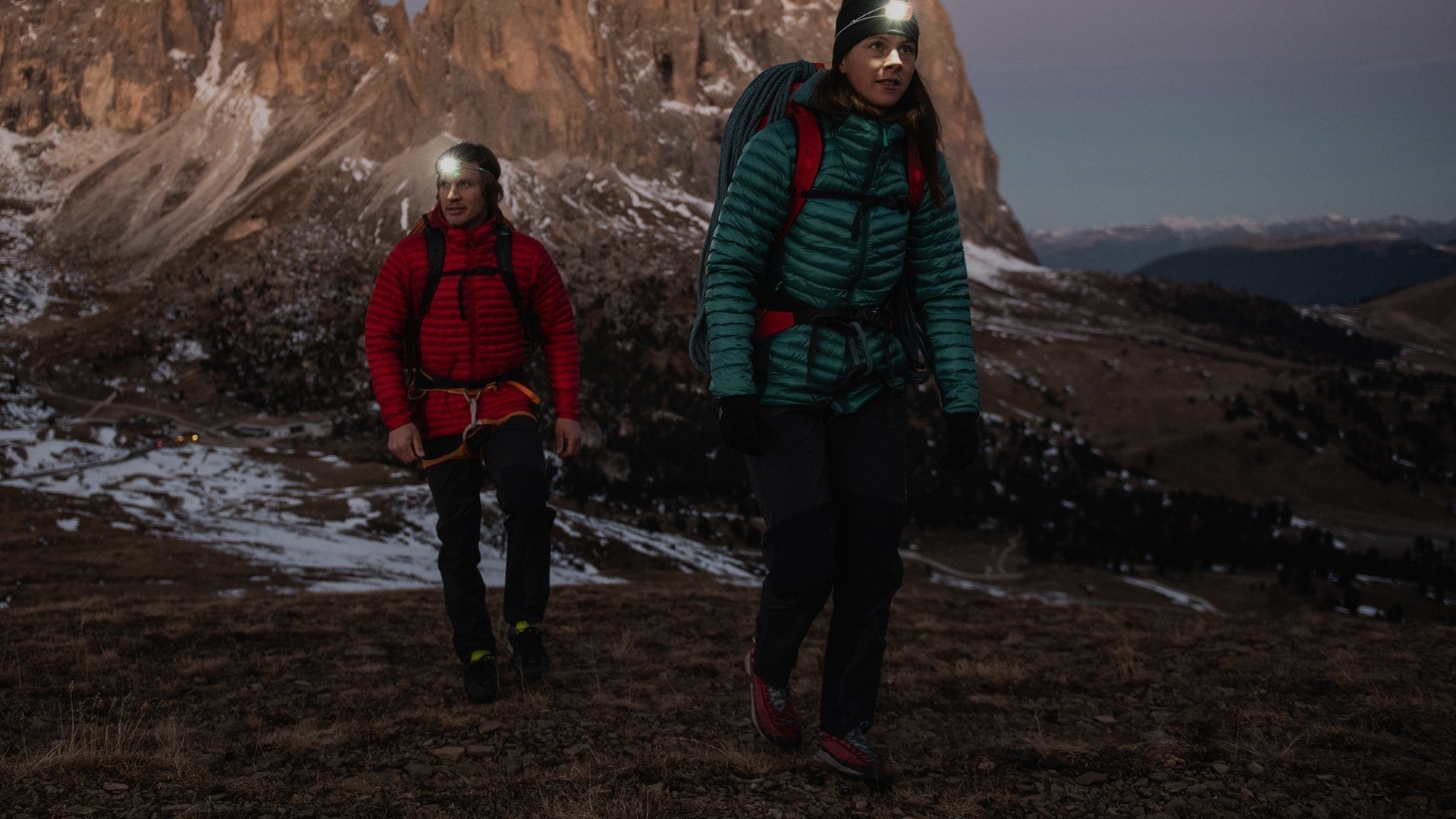
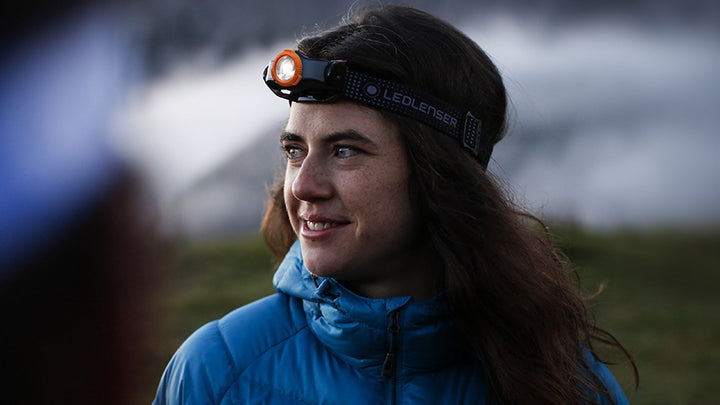
Try the headlamp over the hat or hood you will wear. Check balance, strap adjustment, button sequence, tilt and whether the lamp can be operated without cycling through distracting modes. A red mode can be useful around camp when less glare is preferred.
Match weather resistance to use
Read the current ingress-protection statement and what it covers. Water resistance is not permission to submerge a lamp unless the model explicitly supports it. Inspect seals and charging-port covers before a trip.
Browse head torches and compare sustained use, fit and power—not just the largest lumen number.


