





















How to Choose an Enterprise Inflatable Tent
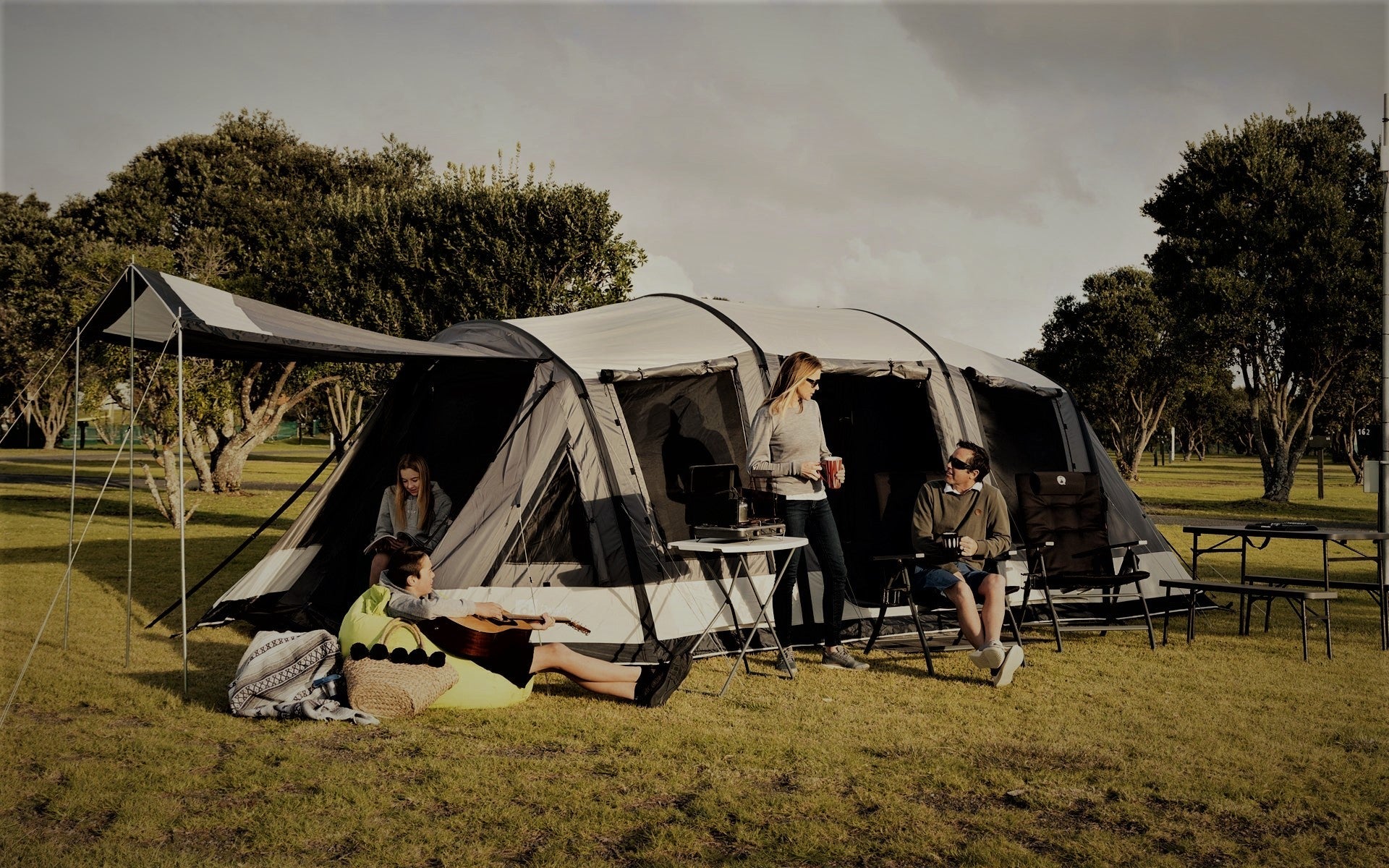
Enterprise inflatable tents use air beams in place of much of a conventional rigid-pole frame. Compare the current models by layout, packed dimensions, included components and exact version compatibility.
Start with the complete floor plan
Do not choose from a berth label alone. Compare the published sleeping spaces, living area, entrances and storage with the real dimensions of the beds and furniture you plan to use.
Check the footprint and transport requirements
Compare the full pitched footprint, packed dimensions and packed weight with the available vehicle and storage space. The Enterprise 1 and Enterprise 2 are distinct layouts, and bundles may contain different accessories.
Understand the air-frame setup
Inflatable beams replace much of the rigid pole structure, but the full pitching sequence still depends on the exact model. Use the supplied instructions for inflation, pegging, guying and pack-down, and check which pump and components are included.
Compare layout and ventilation features
Compare the number and position of doors, windows, vents, sleeping areas and living areas shown for the exact model. Use the product diagrams and instructions rather than assuming the two Enterprise layouts are interchangeable.
Confirm accessories and compatibility
Ground protection, roof covers, porches, connectors, shelters, pumps and replacement parts are model-specific. Match the exact model and version before buying an accessory. Availability, bundle contents and compatibility can change, so use the current product page or ask the Dwights team to confirm.
Inspect, dry and store the tent
Check the fabric, valves, beams, seams, pegs and guylines before travel. After use, clean according to the care instructions and dry the entire tent before storage. Store it in a cool, dry place without long-term pressure on valves or fabric.
Browse the current inflatable air tent range and compare each product's live specifications, compatibility and availability.